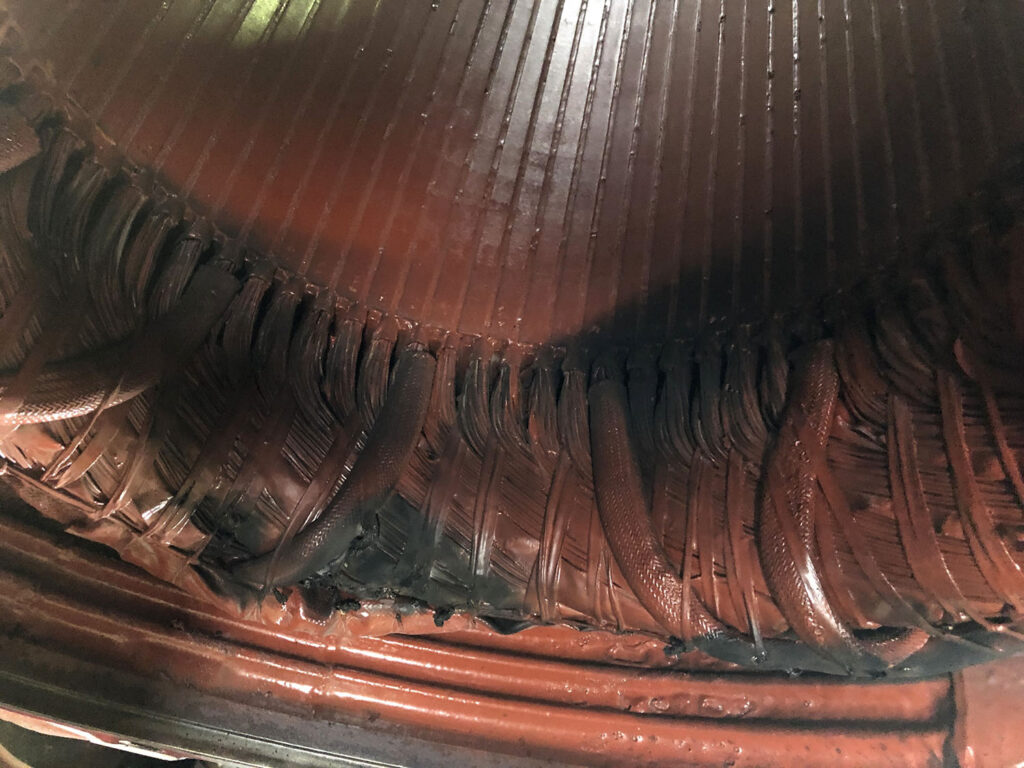
Variable Frequency Drives (VFDs) are widely used across industries because they save energy and provide precise motor control. They make sense for most applications—but if not managed correctly, VFDs can dramatically reduce the lifespan of your motors. In some cases, motor warranties are even voided due to damage caused by VFD operation.
The problem? While many facilities address harmonic distortion with solutions like filters or multi-pulse drives, load-side issues often go overlooked. These are the hidden dangers that can ruin motors faster than expected.
In this guide, we’ll break down the four biggest ways VFDs can damage electric motors—and provide proven solutions to protect your equipment and avoid costly downtime.
1. VFDs Damage Motor Windings
VFDs use Pulse Width Modulation (PWM) to simulate an AC sine wave. Unfortunately, PWM produces high peak voltages that can puncture insulation and short motor windings. The result? Burnt motor windings, unplanned failures, and expensive repairs.
✅ Solution:
-
Always specify inverter duty motors that comply with NEMA MG1 Part 31.
-
Verify that the motor insulation system is designed to handle the steep voltage spikes from PWM output.
👉 Pro Tip: Don’t just trust the label “VFD-rated.” Confirm the motor meets the correct NEMA standard before purchase.
2. VFDs Destroy Motor Bearings
Even with inverter duty insulation, motors remain vulnerable to shaft currents generated by VFDs. These currents discharge through bearings, causing microscopic electrical arcs that lead to pitting, frosting, and fluting. Over time, this results in premature bearing failure.
✅ Solutions include:
-
Shaft grounding rings
-
Grounding straps
-
Ceramic or insulated bearings
-
Insulated housings or coated bearing races
Each application may require a different combination of these technologies to effectively protect motor bearings.
3. VFDs Overheat Motors (Cooling Issues at Low Speeds)
When motors run below full speed, their cooling fans spin slower and provide less airflow. This isn’t just a problem at extremely low frequencies—any speed reduction decreases cooling efficiency. Overheating shortens motor life and leads to unexpected failures.
✅ Solutions:
-
Choose motors with a 1.15 service factor or higher for added thermal margin.
-
For continuous low-speed operation, install a constant-speed blower to ensure proper cooling.
4. VFDs with Long Lead Lengths Damage Motor Windings
Long cable runs between VFDs and motors amplify PWM pulses, creating dangerous voltage spikes. These surges can exceed 1500V, even on 480V systems, and quickly break down motor insulation—leading to winding failures.
✅ Solutions:
-
Use “Soft PWM” VFDs that limit voltage spikes automatically.
-
Install a dV/dt filter to reduce peak voltages (effective for most NEMA MG1 Part 30/31 motors).
-
For the best protection, consider a sine wave filter, which converts PWM into a true sine wave.
⚠️ While sine wave filters are more expensive, they often cost less than the downtime and replacement costs of losing a large horsepower motor.
Protecting Your Motors from VFD Damage
While VFDs deliver incredible efficiency and control, they also introduce new risks to electric motors. By addressing winding failures, bearing damage, cooling limitations, and long lead voltage spikes, you can significantly extend motor life and reduce maintenance costs.
✅ Best Practices for Motor Protection with VFDs:
-
Specify NEMA MG1 Part 31 inverter duty motors.
-
Incorporate bearing protection solutions.
-
Add auxiliary cooling for low-speed operation.
-
Install filters when using long cable runs.
Final Thoughts
VFDs aren’t going away—they’re essential for modern energy efficiency and process control. But without the right precautions, they can ruin motors, cause costly downtime, and shorten equipment life.
At Knower Network, we recommend working closely with your suppliers and contractors to ensure motors, drives, and filters are correctly matched to your application. With the right combination of equipment and protective technologies, you’ll get the full benefits of VFDs—without sacrificing motor reliability.